
Crown Refs · Development resources
Basketball Referee Training
Better officiating starts with a repeatable process: study the rules, practice the mechanics, review your decisions, and get feedback you can use in your next game.
Start hereChoose one skill, practice it deliberately, and use your next game to check whether the habit is improving.
What should basketball referee training include?
A useful training plan connects rules knowledge with what you do on the floor. Knowing a rule matters, but so do your position, your view of the players, the timing of your whistle, and how you communicate the decision.
Start with the rules and mechanics used by your competition. High school, NCAA men’s, NCAA women’s and other basketball competitions do not all use the same rules or procedures. Your local association or governing body should be your reference for current requirements.
- Rules and case plays: explain the decision and the administration, not just the name of the rule.
- Positioning and coverage: work toward a clear view of the action you are responsible for.
- Signals and presentation: practice clear mechanics and reporting without rushing.
- Communication and teamwork: prepare for conversations with partners, players, coaches and table personnel.
- Film and feedback: identify a specific habit, test an adjustment, then review it again.
Build a training week you can repeat
You do not need to study everything every day. A small, consistent routine gives each session a purpose. The schedule below is a suggested starting point, not a requirement or a promise of a particular result.
Before the week begins, write one observable goal. “Be more confident” is difficult to review. “Finish my preliminary signal before moving to report” gives you something concrete to practice and watch on film.
Study one topic
Spend 15–20 minutes with your current rulebook and related case plays. Write down one situation you cannot yet explain clearly.
Practice one mechanic
Rehearse the movement or signal your local training calls for. Record a short practice clip and look at pace, balance and clarity.
Review a few possessions
Watch the lead-up, the decision and the next action. Separate what the camera shows from what your position allowed you to see.
Bring a focused question
Ask a mentor or training group about one point of uncertainty. Give the rule set and game context instead of asking only, “Was I right?”
Apply and reflect
Choose one adjustment for the next assignment. Afterward, record what improved and what still needs work.
Combine online learning with on-court practice
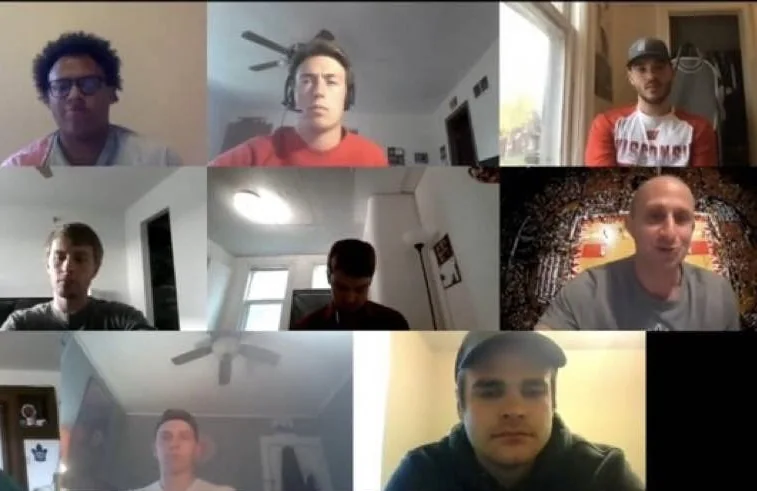
Online basketball referee training lets you pause a play, compare perspectives and ask questions outside a game. On-court work asks you to apply that learning while moving, communicating and making decisions in real time. The two support each other.
Crown Refs has hosted more than 500 online training sessions since 2021. Its training includes live group instruction, rules review, guest speakers, Signal School, film breakdowns and one-to-one coaching. Access and the level of support vary by membership or service.
Crown Refs Camp adds an in-person setting for teaching, competitive repetitions and feedback. A camp can support your development, but attendance is not a guarantee of certification, assignments or advancement.
Turn feedback into a better next rep
A long list of corrections can be difficult to use. Ask which adjustment would make the biggest difference right now, and what improvement would look like on your next clip.
Keep a simple development log with four entries: the situation, what you observed, the feedback you received, and the action you will try. Revisit it after several games. Look for repeatable habits instead of judging your progress from one call.
Group discussion can expose you to questions you have not considered. Individual coaching can spend more time on your own patterns. Choose the amount of support you will actually use, and check what is included before joining.
Your next training session starts with one question
Choose a recent possession that left you uncertain. Identify the rule set, describe your responsibility, and write what you want to understand. That question becomes the starting point for film study, a mentoring conversation or your next live session.
If you are not officiating yet, start with the beginner guide below. Crown Refs provides education and support; your local league or governing organization determines registration, eligibility and assignments.
From the Crown Refs library
Watch and learn
Watch how a dedicated mechanics session is structured. Choose one presentation habit to practice afterward, using the mechanics required by your competition.
Make development a year-round habit.
Explore Pro, Mentor and One-to-One support, then use Find Your Path to choose the approach that fits your journey.
Explore Memberships